Intro

I love movies. I have loved movies all my life. I grew up on them. When I was eight years old, I managed to convince myself I would make movies when I grew up. Now I am in the process of getting a degree in Film Studies. I write about film more than ever before, partly because I have to for my classes, mostly because I enjoy it, because I have something to write about. Sometimes it helps me understand the film better; sometimes it helps me understand myself better.
I created this blog as a place to showcase my work, and also as an incentive to keep writing reviews, analyses, and essays over breaks, when there’s no one here to grade me.
I have tried many times, and failed, to explain in a coherent manner why it is that I love films. Here is my best—and most coherent—guess.


Showing posts with label Academy Awards. Show all posts

Sunday, January 19, 2014

Her (2013)


The movie’s official poster calls Her “A Spike Jonze Love Story.” The decidedly unofficial “honest” movie poster created by Uproxx calls it “a two-hour closeup of Joaquin Phoenix’s face.” More on that in a bit; for now I’d like to focus on the official tagline. Jonze (of the genre-bending—and genre-shaping—Being John Malkovich and Adaptation) is a filmmaker with an astute sense of the absurd. His films are genuinely provocative, brazenly original and bravely inquisitive, and Her, Jonze’s screenwriting debut, is no exception. But the film also offers one of the loveliest romances ever to have graced the silver screen. The fact that it transpires between a man and his software only increases my admiration for the delicacy and depth of feeling packed into the relationship, a brilliant conceptual gag that proves nonetheless sincere and completely plausible. Wildly inventive, challenging and engaging, this subtly profound film follows its own quirky, amusing course. It’s a melancholy, eerie love story unlike anything else you’ve seen this year—or ever.

In Her’s opening shots, Theodore Twombly (Joaquin Phoenix in a quietly heroic, beautifully hushed performance), is making an unabashed declaration of love to an unseen beloved. The actor, as well as his character, is unaffected, sincere, disarming. We quickly discover, however, that his lovely words are not addressed to his beloved at all, that this is what Theodore does for a living; the character is a latter-day Cyrano writing heartfelt notes-for-hire at BeautifulHandwrittenLetters.com (the handwriting all computer-generated, of course). The cuteness is instantly turned to cynicism, in a movie that is both visionary and traditional, tender and cool, passionate and wispy. Like the lingering analog affection for handwriting in a digital age, Her argues for both the past and the future, with a soulfully poetic spirit that’s become extremely rare in American cinema.

Thursday, January 16, 2014

2014 Oscar Nominations – This Year It's All About Who's Not There


Well, the Academy of Motion Picture Arts and Sciences voters—i.e. the people who hand out those tiny little golden men everyone seems to be talking about today—have had their say. Here is my response.


Wednesday, November 27, 2013

Fargo (1996) Analysis


Joel and Ethan Coen’s Fargo opens, appropriately, in Fargo, North Dakota, although this is the only scene in the movie to actually take place in the title location. Over the opening credits we see a car, barely visible through the fog in the distance as it makes its slow progression through the snowy, bluish gray landscape. The tan Sierra goes up and down on the frozen-over roads, occasionally disappearing into snowy voids. The Coens’ Midwest is bleak and ominous, a mood perfectly underlined by Carter Burwell’s gloomy score. The brothers and virtuoso director of photography and long-time collaborator Roger Deakins create an epic landscape of near mythical proportions, if only for the purpose of contrasting it with the ordinariness and decidedly unheroic nature of the characters that inhabit it. Contradictions like this one abound in the Coens’ universe; their work has always defied definition. They play fast and loose in terms of plot and refuse to be constrained by the formal imperatives of conventional narrative, stitching together a number of different genres and in the end transcending such conventions altogether. Fargo starts out as a perfect-crime drama, but soon embraces conventions of the noir, the thriller, and tragedy, all with a big, darkly humorous smile on its lips.

Sunday, July 7, 2013

La Dolce Vita (1960) Analysis


Great Italian director Frederico Fellini’s La Dolce Vita (1960) chronicles the fast-paced, seductive life of the Roman cosmopolitan world and all its excesses, capturing a moment in time when notions of glamor, empty entertainment and the promise of a quick thrill seemed poised to replace all humanizing values, and dignity was transmuted into the sensational. For Fellini, the film marks a turning point, a shift away from his neorealist roots as a writer for Rossellini’s Open City (1945) and Paisa (1946), and his own earlier films like I Vitteloni (1953), La Strada (1954), and The Nights of Cabiria (1957). The director’s movies became more stylized, more poetic, finally giving way to the visual carnival of (1963), Juliet of the Spirits (1965), and Amarcord (1973). His images are highly charged with contrasts, textures, and movements and filled with longing and regret, even despair, but there is always a sense of joy, of wonder, a pure expression of love for his characters, their stories, and cinema. La Dolce Vita is not a film, it’s an experience. Following Marcello, a young journalist on the make (played by Marcello Mastroiani in the first of a series of collaborations with Fellini) as he chases down stories and women, the movie is a loose series of episodes, nights and dawns, ascents and descents weaved together in the decadent rhythm of an endless, aimless search for the elusive sweet life of Rome’s upper class.
 

Monday, April 15, 2013

The Piano (1993)


Jane Campion’s The Piano, released in 1993, is a haunting, strange, strikingly beautiful and bold film unlike any other I have ever seen. It plunges headlong into the cold, desolate New Zealand beaches and the enchanting, intimate, and claustrophobic bush made up of brilliant blues and greens so vibrant it looks unearthly. The surreal quality and otherworldly nature captured in the underwater scene, which is not quite in slow motion, but not shot in real time either, invests the entire film. The movie might seem minimalistic and even sparse, but the universe it creates is one fervid with feeling and images of a dreamlike, unreal, mysterious lyricism.

The petite, black and white clad Ada (Holly Hunter in an Academy Award wining performance), with her pale skin, large dark eyes and hair parted severely in the middle and constrained twofold by a bun and a bonnet, is as out of place and incongruous in this environment as her English Broadwood piano is on the grey beach in the wind and rain. But just as Ada seems reserved, restrained, and remote, the film, too, is only deceptively small and quiet; like its main character, The Piano hides, under a discreet exterior, surprising strength and sexual passion. Nothing is quite what it appears in Jane Campion’s romantic, unique movie.

***This essay contains only mild spoilers, probably not much more than any review of the film.


Monday, March 4, 2013

My Belated Oscar Comments


It seems like only yesterday I was throwing a half-eaten apple at the screen when Meryl Streep won the best actress Oscar over Viola Davis, but yet another year of movie-going and relentless, mostly misguided predicting finally came to a close with the 85th Academy Awards ceremony held on Feb. 24.

Hosted by Family Guy creator Seth MacFarlane, Oscar night was filled with surprises. MacFarlane opened the ceremony with a hilarious, irreverent, edgy monologue taking the usual jabs at the academy, the industry and its stars. William Shatner joined the host, appearing on a giant screen as Star Trek’s Capt. Kirk to warn MacFarlane from the future, “Your jokes are tasteless and inappropriate, and everyone ends up hating you.” 

Wednesday, February 13, 2013

Ghost World (2001) Analysis


In Ghost World, director Terry Zwigoff brings Daniel Clowes’ graphic novel characters to vivid, vibrant life. The movie captures the same ironic, bittersweet tone of Clowes’ writing, tracking Enid’s dogged search for authenticity in a world populated with Holden Caulfield-spite-worthy stupid, shallow phonies and creating a powerful adaptation which, although straying from its source material, remains serious and sad without ever losing its sense of humor. A loving and level gaze at the tedium and mystery of teenage life in contemporary America, Ghost World also approximates the author’s clean, quiet drawing style through its unhurried editing, unobtrusive, subtle compositions, and general unremarkability of the camerawork. In this universe, the characters and not the cinematics carry the story, and the form reflects the simplicity of their lives, helping to portray a realistic lonely and misunderstood (not least of all by herself) young girl  who has just graduated high school, but, unlike her best friend, hasn’t quite entered the real world yet.

 ***This is an analysis, not a review, and it contains spoilers 

Wednesday, January 16, 2013

Zero Dark Thirty (2012)


Kathryn Bigelow’s Zero Dark Thirty is a taut, tough, tart film that brims with tension and suspense. Promoting it as a thriller has been a bold move, considering we all know the conclusion. But the movie does thrill, because few are familiar with the ins and outs of the ten-year manhunt for al-Qaeda’s leader in this much detail.

Penned by Mark Boal, the reporter-turned-screenwriter who won an Academy Award for Bigelow’s The Hurt Locker, the movie is a seamless weave of truth (allegedly based on “first-hand accounts of actual events”) and drama that hews closely to real-life but takes some poetic license. Much of the fascination of watching it comes from the gradual unveiling of facts, the meticulous and comprehensive chronicling of every step forward, every setback, dead-end and disappointment on the long, slow, arduous road to bin Laden’s capture on May 2, 2011 at zero dark thirty (military-speak for half past midnight).

More than anything else, the film celebrates process, professionalism, and the perfect mix of deduction, intuition, supposition, screaming matches, and luck main character Maya (the versatile, ubiquitous, incredible Jessica Chastain) uses. Like Spielberg’s Lincoln, Zero Dark Thirty takes us behind the scenes of one of the most important events in American history, showcasing the messy, ethically complicated, strenuous means by which progress is oftentimes achieved.

Wednesday, January 9, 2013

Les Misérables (2012)


Based on the musical written by Alain Boublil and composer Claude-Michel Schönberg (with English-language lyrics by Herbert Kretzmer), Tom Hooper’s Les Misérables opens up the teeming fresco of squalor and upheaval beyond the limitations of the theater. This story of oppression, liberation, and redemption produces a swooping, splashy cinematic panorama of an unjust, compassionless, unfeeling world, in which the innocent and the idealistic pay for crimes they have not committed, and plants a seed of barely flickering hope.

A work of audacious ambition, Les Misérables, Victor Hugo’s 19th century 1,400-page historical novel of rebellion and romance ran the emotional gamut, and the film, as well, sweeps viewers on a stirring, swelling wave of feeling that will leave few eyes dry. Mixing gritty, grimy realism with the artifice of stage production, Hooper brings Hugo’s characters to celluloid life with gusto and grace.

Sunday, January 6, 2013

Life of Pi (2012)


 Life of Pi, Ang Lee’s allegorical meditation on survival, struggle, the nature of storytelling and spirituality, is a delicate, dazzling, devastatingly gorgeous, but disappointing film in terms of its dramatic thrust. Visually stunning and completely immersive, the world Lee creates is one of lyrical, haunting beauty, but the movie falls a bit short in terms of emotional involvement, long-lasting impact, and narrative complexity.

The fantastical fairytale, adapted by screenwriter David Magee from Yann Martel's award-winning, bestselling novel, drifts for much of its duration, centering on the title character’s staggering two hundred plus days at sea, stranded on a life boat with an adult Bengal tiger incongruously named Richard Parker.

Sunday, December 23, 2012

Hitchcock (2012)


Sascha Gervasi’s Hitchcock, written by John J. McLaughlin, is a thoroughly entertaining, but ultimately uneven film about the Master of Suspense’s professional struggles to finance, make, and promote Psycho, and his personal problems with his long suffering wife, Alma Reville. The best thing the film does is treat its title character not as a legend, but as a person. Half behind the scenes look at the inner workings of Hollywood during its last decade of innocence and half family drama, the movie’s different segments, however, vary greatly in quality and tone.

Opening on a quiet prologue taking place in 1940s rural Wisconsin, the casual tone is firmly set when the peaceful tableau turns into a gruesome family murder, and the camera pans to reveal the title character’s portly presence, calmly sipping a cup of tea while directly addressing the audience, as he did in his famous “Alfred Hitchcock Presents” show. Brother has been killing brother since Cain and Abel, Hitchcock (Anthony Hopkins) croons is his incomparable British drawl; who is he to deprive us of the pleasure of watching it happen on the silver screen?

Wednesday, December 19, 2012

Hugo (2011)


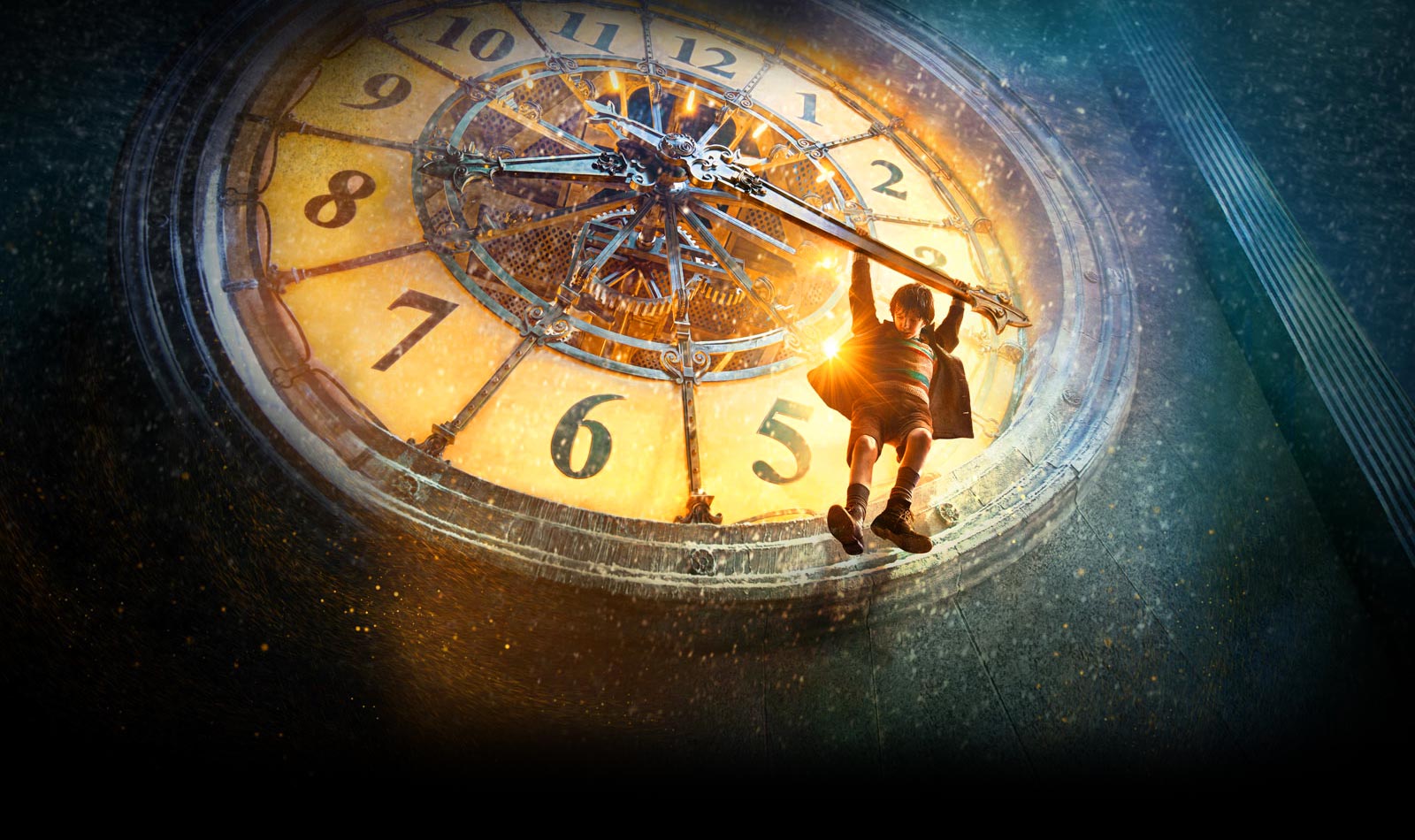
Martin Scorsese’s Hugo had me at the first shot—one of the director’s signature bravado tracks that swoops from an aerial view of early 1930s’ Paris down into the teeming cinematic fresco that is the Gare Montparnasse. We are plunged into the middle of the action, from the train tracks with their narrow platforms amid happy shoppers and hurried travellers, to a pair of Dickensian bright blue eyes peering out of a hole in a clock face above the station’s entrance.

The big eyes belong to Hugo Cabret (played by Asa Butterfield), a lonely twelve year old boy who has a gift with gears, screws, springs, knobs, wrenches, and levers and makes sure every clock in the station is wound and ticking away just the right time. His true occupation, however, is trying to fix his automaton, a mechanical man that is all he has left from a happy past with his clockmaking father (Jude Law). Those times seem like another lifetime; now when Hugo gazes longingly at the dreamlike cityscape and its Eiffel Tower, his expression betrays a sadness too deep for someone so young.


The Artist (2011)


Michael Hazanavicius’ The Artist is a lavish love letter to old Hollywood cinema, but it is so much more. It speaks volumes without ever saying a word. Shot in luscious black and white and (mostly) silent, it harkens back to a time when film was a purely visual medium, proves that if a picture is worth a thousand words, then a second of film is worth that times every one of its twenty-four frames, and assures us that louder isn’t always better. At their simplest and quietest, movies are sometimes the most magical.

Steeped in a bold, unapologetic and unashamed nostalgia, the film chronicles the movie industry’s often painful transition to sound in the late 1920s, and what happened to so many silent film stars when audiences demanded they be heard as well as seen.

The Artist, which spans a five year period, opens in 1927, when the sign in the hills still said HOLLYWOODLAND, and dashing movie star George Valentin was on top of the world. The public adored him and his arsenal of arched eyebrows and dazzling smiles almost as much as he adored himself.