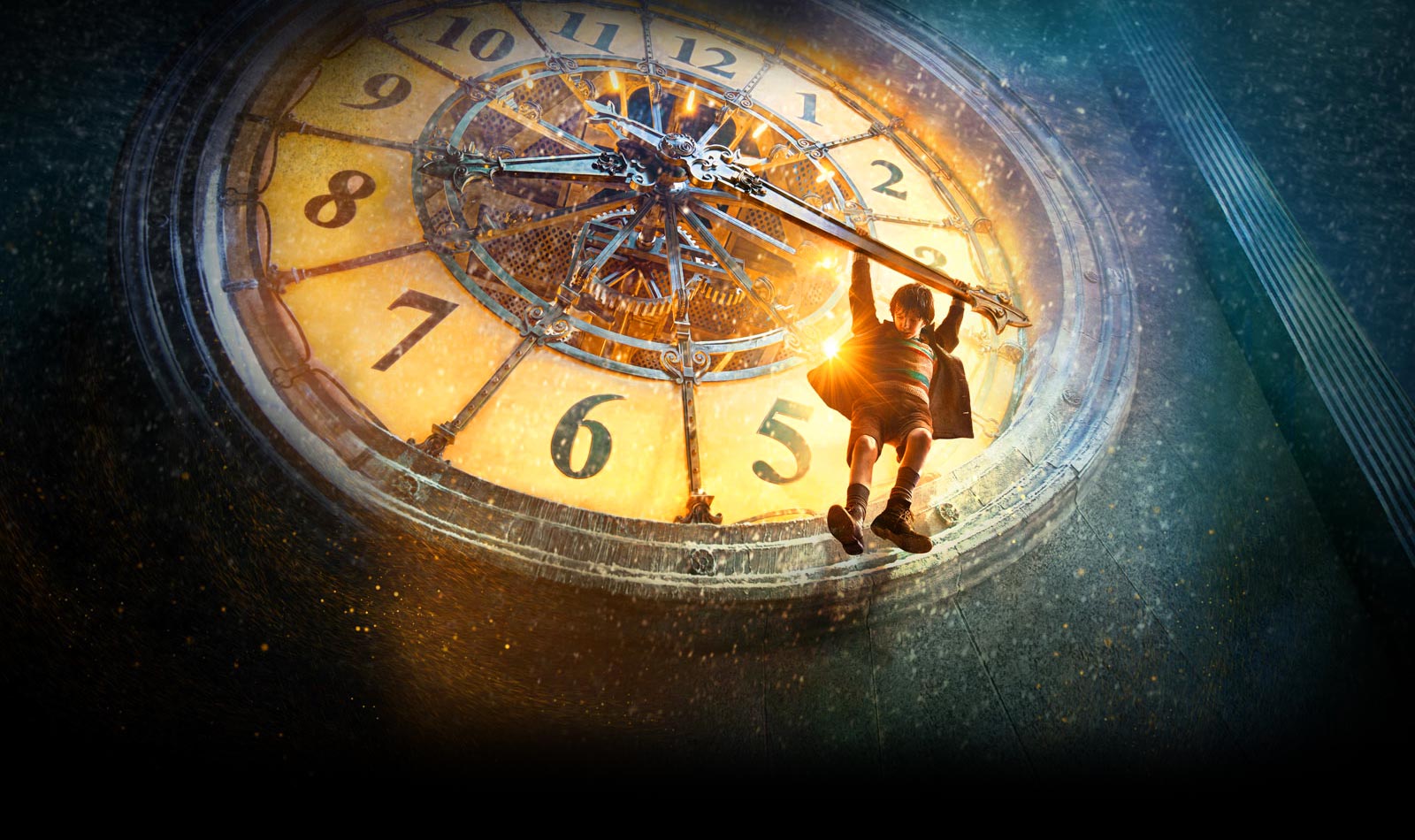
 Martin Scorsese’s Hugo
had me at the first shot—one of the director’s signature bravado tracks that
swoops from an aerial view of early 1930s’ Paris down into the teeming
cinematic fresco that is the Gare Montparnasse. We are plunged into the middle of the action, from the
train tracks with their narrow platforms amid happy shoppers and hurried
travellers, to a pair of Dickensian bright blue eyes peering out of a hole in a
clock face above the station’s entrance.
Martin Scorsese’s Hugo
had me at the first shot—one of the director’s signature bravado tracks that
swoops from an aerial view of early 1930s’ Paris down into the teeming
cinematic fresco that is the Gare Montparnasse. We are plunged into the middle of the action, from the
train tracks with their narrow platforms amid happy shoppers and hurried
travellers, to a pair of Dickensian bright blue eyes peering out of a hole in a
clock face above the station’s entrance.
The big eyes belong to Hugo Cabret (played by Asa
Butterfield), a lonely twelve year old boy who has a gift with gears, screws, springs,
knobs, wrenches, and levers and makes sure every clock in the station is wound
and ticking away just the right time. His true occupation, however, is trying
to fix his automaton, a mechanical man that is all he has left from a happy
past with his clockmaking father (Jude Law). Those
times seem like another lifetime; now when Hugo gazes longingly at the
dreamlike cityscape and its Eiffel Tower, his expression betrays a sadness too
deep for someone so young.
