Intro

I love movies. I have loved movies all my life. I grew up on them. When I was eight years old, I managed to convince myself I would make movies when I grew up. Now I am in the process of getting a degree in Film Studies. I write about film more than ever before, partly because I have to for my classes, mostly because I enjoy it, because I have something to write about. Sometimes it helps me understand the film better; sometimes it helps me understand myself better.
I created this blog as a place to showcase my work, and also as an incentive to keep writing reviews, analyses, and essays over breaks, when there’s no one here to grade me.
I have tried many times, and failed, to explain in a coherent manner why it is that I love films. Here is my best—and most coherent—guess.


Showing posts with label Hugh Jackman. Show all posts

Friday, May 30, 2014

X-Men: Days of Future Past (2014)


Three years ago, Kick-Ass director Matthew Vaughn reinvigorated the Marvel franchise with the clever historical revisionism of 2011’s X-Men: First Class, which boasted a superb new cast, cool retro style, globetrotting intrigue, and a refreshing emphasis on character. Bryan Singer, the series’ original creator on board as director for the first time since 2003’s X2: X-Men United, confidently carries that same momentum, combining the gravitas of the early films with the playfulness of Vaughn’s follow-up. Making for exceptional pacing and relentless drive, Singer pulls together an ambitious, suspenseful film and secures a future for the franchise at the same time he continues to reinvent it.

The X-Men series has always been somewhat unique among its kind because it wears its allegorical heart on its sleeve. By chronicling the adventures of a despised minority, it pokes around some interesting social and political issues. The theme of ostracized, oppressed outsiders empowered to fight against their social stigma in ways both good and evil runs throughout the seven films to date. The central conflict is the endless moral argument between Professor X and Magneto, between the idea that mutants should fight for the redemption of mankind and the insistence that they should defend themselves by any means necessary. This time around, their misunderstood humanity is amplified by extreme physical vulnerability, their struggle framed by a genocidal battle in the near future.

Thursday, October 3, 2013

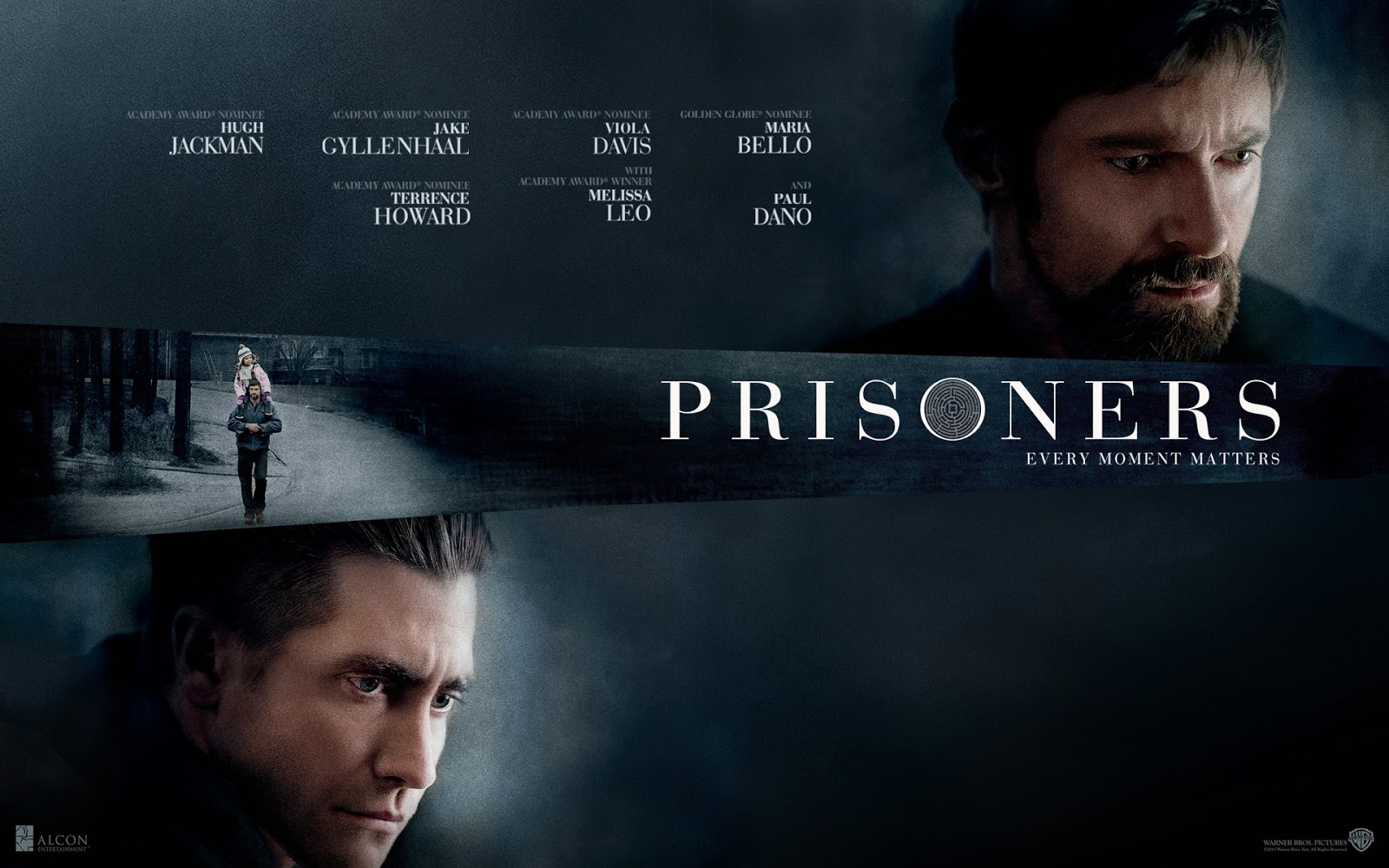
Prisoners (2013)


Fully deserving of mention in the same breath—or gasp—as Seven, Mystic River, and Zodiac, Prisoners' fragmented central mystery burns with white-hot intensity. Director Denis Villeneuve and writer Aaron Guzikowski weave a dense narrative web of seemingly disparate plot strands interwoven around a complex moral core; the movie is concerned with the psychological, emotional and social consequences of violence as much as solving the crime.

The wages of sin, guilt, vengeance and redemption weigh heavily on the characters of Prisoners. With remarkable visual elegance and economy, the gifted Quebecois director flawlessly captures the moods and mores of small-town, God-fearing America. “Our Father, who art in heaven, hallowed be Thy name. Thy kingdom come. Thy will be done, on earth as it is in Heaven.” These words open Villeneuve’s film, spoken over a wintry forest landscape, frozen in the icy late-autumn chill. The slow, creeping camera pulls back to reveal the barrel of a shotgun, pointed head on at a lonely deer. This is only the first of many images of predators pursuing their prey.

Saturday, August 3, 2013

The Wolverine (2013)


Trying to resist the cinematic lobotomy Hollywood pulls on viewers every summer, I have come up with a movie-going strategy that involves lowering expectations. If, stepping into a theater, I expect nothing, then the films that offer nothing or close to it (After Earth, The Hangover Part III, Man of Steel, R.I.P.D.) will not disappoint as much. And every once in a while, I will be surprised by a movie that offers everything: story, character, excitement, action, intrigue, romance, and the magic of escaping into a different world. James Mangold’s The Wolverine was that kind of surprise.

Repairing the damage done by Gavin Hood’s X-Men Origins: Wolverine, Mangold tells an unexpectedly personal and intimate tale with style and snap. This time around the most iconic X-Man of all is somewhat world-weary, wounded, and worn. At the forceful center of the film is Hugh Jackman, the biggest marvel of Marvel's The Wolverine, who returns for his sixth screen appearance as the lupine superhero. Letting a less visible, more vulnerable side show, Logan, a.k.a. the titular hero, tests his extremes and overcomes his limits, physically as well as emotionally. The movie  is as packed with feeling as its title character, a mutant with more humanity than all of the human heroes of this summer’s blockbusters combined. The filmmaker’s foray into the X-Men franchise is endlessly entertaining, if somewhat existential, dipping into dark and ponderous psychological territory; Mangold puts his character through all sorts of physical pain, but the director is also interested in the deeper aches of the soul.

Wednesday, January 9, 2013

Les Misérables (2012)


Based on the musical written by Alain Boublil and composer Claude-Michel Schönberg (with English-language lyrics by Herbert Kretzmer), Tom Hooper’s Les Misérables opens up the teeming fresco of squalor and upheaval beyond the limitations of the theater. This story of oppression, liberation, and redemption produces a swooping, splashy cinematic panorama of an unjust, compassionless, unfeeling world, in which the innocent and the idealistic pay for crimes they have not committed, and plants a seed of barely flickering hope.

A work of audacious ambition, Les Misérables, Victor Hugo’s 19th century 1,400-page historical novel of rebellion and romance ran the emotional gamut, and the film, as well, sweeps viewers on a stirring, swelling wave of feeling that will leave few eyes dry. Mixing gritty, grimy realism with the artifice of stage production, Hooper brings Hugo’s characters to celluloid life with gusto and grace.