Intro

I love movies. I have loved movies all my life. I grew up on them. When I was eight years old, I managed to convince myself I would make movies when I grew up. Now I am in the process of getting a degree in Film Studies. I write about film more than ever before, partly because I have to for my classes, mostly because I enjoy it, because I have something to write about. Sometimes it helps me understand the film better; sometimes it helps me understand myself better.
I created this blog as a place to showcase my work, and also as an incentive to keep writing reviews, analyses, and essays over breaks, when there’s no one here to grade me.
I have tried many times, and failed, to explain in a coherent manner why it is that I love films. Here is my best—and most coherent—guess.


Showing posts with label 4 stars. Show all posts

Sunday, July 27, 2014

Life Itself (2014)


Roger Ebert loved movies—except the ones he hated, hated, HATED. But even then he was (usually) honest, fair, and kind. He was a generous champion of films and filmmakers; he treated their triumphs like personal victories, their failures as intimately as if they were his own. Steve James’ richly satisfying, sensitive, stirring biography is many things, and all of them do him justice. Meticulous and moving, Life Itself is about the history of both cinema and criticism, about Roger’s illustrious career, his loving family, friends, and colleagues, his illness and death—tragic because it robbed us of a great writer, a great thinker, and a great man—and the memories he left behind, but most of all it is about life, his and ours, the life of movie lovers everywhere. Because life itself, that loaded two-word phrase, is what Roger really wrote about when he wrote about the movies.

The film has a (pleasantly) rambling, stream-of-consciousness flow to it, underscored by deeper and more serious currents. For anyone familiar with Roger’s writing, as well as anyone who loves film, the movie is a must-see.  It is also surprisingly accessible to those utterly uninterested in film criticism, cutting to the human heart of all this history to tell a raw and riveting life story. The biography almost mimics Roger’s writing style, in which he combined his encyclopedic knowledge of cinema with an approachable, plainspoken prose that could be understood and enjoyed by anybody.

Friday, June 6, 2014

The Immigrant (2013)


A great classicist, James Gray has often been called painterly, operatic, novelistic. It’s as if we have forgotten what good cinema looks like, searching other media for a comparison, assuming the heft and heart of art and literature is somehow outside the movies’ grasp. Gray’s The Immigrant, which premiered last year at Cannes and is just now hitting theaters, is a romantic tale that hides its monumental scale and subject in plain sight, a subtle, soulful masterpiece that cuts to the very heart of the American experience. Wrapping big themes in an intimate embrace, the film feels both epic and personal. It not only reminds us of what film used to be, but also of what it could be once again. A story of survival and redemption for the characters, the movie surely accomplishes the same for a very specific, straightforward kind of filmmaking that I haven’t seen in a very long time.

A mournful, mesmerizing meditation on the immigrant experience, the movie opens on a slow zoom of the Statue of Liberty shrouded in foggy mist, its back turned to the camera. From that first moment, The Immigrant unfolds in the foggy, misty gap between the promise the statue embodies and the harsh realities newcomers encounter when that promise turns its back on them. Later in the film, Lady Liberty will make a second appearance, this time as the main character’s cabaret costume, a sad parody of the ideals represented by the statue. The woman is asked why she came to America. “I want to be happy,” she mouths gently, her voice breaking with infinite sorrow. In another show, a magician levitates before the Ellis Island detainees, who are for the most part awaiting deportation to their home lands, assuring them that anything is possible if they believe—“The American Dream is waiting for you,” he says at the end of the act. How appropriate that the pep talk comes in the middle of a con act.

Thursday, January 2, 2014

The Wolf of Wall Street (2013)


The Wolf of Wall Street starts with an ad for Stratton Oakmont; the commercial makes us believe the brokerage firm is a golden American institution, a rock of financial stability, as traditional, trustworthy, and established as if the Mayflower passengers had etched the very name into Plymouth Rock. Cut to the nightmarish circus of a rollicking party on the trading floor of the company—not unlike what we’ve imagined went on in Rome before the fall (all but the roller-skating chimp and snorting coke off hookers, of course)—and then freeze-frame on the billionaire brokers tossing a dwarf at a huge velcro target, literally and figuratively abusing the Little Guy. Stratton Oakmont is America, its founder proudly proclaims in the ad. How horrifying is it to realize that he just might be right?

After going unexpectedly family-friendly with 2011’s Hugo, Martin Scorsese pulls a dramatic 180 with The Wolf of Wall Street, a nonstop barrage of drug-fueled decadence adapted by Terence Winter from real-life stockbroking swindler Jordan Belfort’s memoir. The book is a distant relative of the truth, it’s been said, and the film is a distant relative of the book. A big, unruly bacchanal with a sizeable, sinister smile on its lips, the movie is a bit of a contradiction, both abashed and unashamed, spectacle and cautionary tale, ode to and indictment of dollars, depravity, and conspicuous consumption.

Disturbing and exciting, exhilarating and exhausting, the endlessly entertaining film holds together by sheer virtue of its exuberant, furious filmmaking energy. Scorsese might be the best cinematic connoisseur of charismatic sociopaths, and Henry Hill or Nicky Santoro ain’t got nothing on Belfort. The Wolf of Wall Street’s brokers are avatars of an age of heedless self-indulgence and greed, gangsters with fountain pens instead of guns, slicing and dicing your bank account and putting your savings in a vise rather than your head. And, just like in the much less cynical and coked-up American Hustle, you’ll cheer the con artists on and thank them for swindling you when they’re done.

Sunday, December 29, 2013

American Hustle (2013)


I was going to start my review by saying American Hustle is the best Scorsese movie since Goodfellas, no matter that it wasn’t actually directed by Martin Scorsese. But American Hustle is made by movie maverick David O. Russell, now one of Hollywood’s biggest and most reliable A-list filmmakers, and the film is truly and uniquely his, as much I Heart Huckabees as it is Casino. Like its main characters, this almost rudely, insistently entertaining movie has tremendous confidence and sparkling showmanship, spinning its twisted Horatio Alger yarn with all the skill of a seasoned swindler.

Russell doesn’t just flirt with disaster—as he did in Silver Linings Playbook—but courts it openly. Almost continuously over its 135 minutes, the director seems to embrace complete entropy (if not anarchy) and an exaggerated human circus approach, only to pull a long con of his own, one performed with enough control and elegance to have you hooked. If the result, more flimflammery flair than finesse, seems like a bit of a narrative mess, it’s a rich, marvelous mess in which the narrative is not what mattered to begin with.

Friday, November 1, 2013

The Counselor (2013)


The Counselor, Cormac McCarthy’s much-anticipated screen-writing debut paints an elusive, eccentric, exquisitely rendered picture of poetic pain. Filled with bizarre, bone-grinding violence, twisted characters, confusion and moral compromise, Ridley Scott’s movie becomes a sodden, sordid cautionary tale of good and—mostly—evil. If you were looking forward to the crime thriller—more Tony than Ridley—the film’s trailer seems bent on promoting, The Counselor is not it.

Michael Fassbender heads a burning hot all-star cast, all outshined, hover, by the pulpy, lyrical, hardboiled and hell-bound script, a foray into the mesmerizing and merciless milieu of corrosive drug trade on the American-Mexican border—a barrier as moral as it is geographical for much of American fiction. McCarthy and Scott enter a closed, dangerous, elite world, devoid of any ordinary people to act as gateways or guides for the audience or to remind us of a reality beyond the brutal one of the cartel.

Saturday, June 1, 2013

Mud (2013)


“Eventually, all things merge into one, and a river runs through it,” Norman Maclean writes in the last lines of his autobiographical meditation on family, faith, and fly fishing, A River Runs Through It: “The river was cut by the world’s great flood and runs over rocks from the basement of time. On some of those rocks are timeless raindrops. Under the rocks are the words, and some of the words are theirs. I am haunted by waters.” I couldn’t help but think of these words as I watched Jeff Nichol’s Mud, a down in the delta coming of age story that takes place in the wide mythic space where the Mississippi opens up and the horizon stretches boldly to infinity, expanding to encompass the whole world. On that threshold, reality and illusion, the past and the future, the sky and the river become one, and all things merge, pregnant with promise and hope.

But the unstill Southern waters Nichols wades in are as murky and dangerous as the past of the movie’s title character, a tattooed, broken-toothed bayou noir hero who cares about honor and justice more than he’d like to admit. With a graceful, unhurried rhythm and a rustic regional temperament, the movie reaches the patience and picturesque pastoral sights of a Terrence Malick film. Unlike Malick, however, the director of Mud places his characters firmly within their setting but also above it, offering subtleties and surprises in the way of suspense, humor, and a climax that would put many an action film to shame.

Thursday, March 14, 2013

Amour (2012)


In Amour, Austrian filmmaker Michael Haneke points his characteristic brilliant formal tact and penchant for thematic brutality and unemotional candor to the last days of an octogenarian couple. A paean to love, loss, illness, and decline, the film, without a trace of uplift or warm humanism, is as much about life as the as it is about the stark, inexorable truth of death. The movie is unsentimental, unconsoling, unflinchingly serious, and superbly crafted, and, for the first time in his career (The White Ribbon, Funny Games), Haneke manages to turn his chilly pessimism, intellectual grimness and detachment into something resembling empathy, tenderness, and compassion.

The opening credits roll over ascetic silence, and almost immediately we see the dead body of a woman lying on a bed, surrounded by wilted flowers. Life and beauty have faded, and throughout the film we see them diminish, wither away, and finally disappear. This kind of cold realism can hit close to home, reminding us of our grandparents, parents, even ourselves.

Wednesday, January 16, 2013

Zero Dark Thirty (2012)


Kathryn Bigelow’s Zero Dark Thirty is a taut, tough, tart film that brims with tension and suspense. Promoting it as a thriller has been a bold move, considering we all know the conclusion. But the movie does thrill, because few are familiar with the ins and outs of the ten-year manhunt for al-Qaeda’s leader in this much detail.

Penned by Mark Boal, the reporter-turned-screenwriter who won an Academy Award for Bigelow’s The Hurt Locker, the movie is a seamless weave of truth (allegedly based on “first-hand accounts of actual events”) and drama that hews closely to real-life but takes some poetic license. Much of the fascination of watching it comes from the gradual unveiling of facts, the meticulous and comprehensive chronicling of every step forward, every setback, dead-end and disappointment on the long, slow, arduous road to bin Laden’s capture on May 2, 2011 at zero dark thirty (military-speak for half past midnight).

More than anything else, the film celebrates process, professionalism, and the perfect mix of deduction, intuition, supposition, screaming matches, and luck main character Maya (the versatile, ubiquitous, incredible Jessica Chastain) uses. Like Spielberg’s Lincoln, Zero Dark Thirty takes us behind the scenes of one of the most important events in American history, showcasing the messy, ethically complicated, strenuous means by which progress is oftentimes achieved.

Thursday, January 3, 2013

Silver Linings Playbook (2012)


  David O. Russell’s Silver Linings Playbook is a delightful film about rampant dysfunction, desperation, obsession, isolation, hope, and the healing power of love. The writer/director taps into deep recesses of darkness, dealing with such touchy subjects as mental illness, only to make us see the light. Unabashedly positive, this small, intimate movie has a big heart as well as brains, making you think even as you’re overcome by its insanity and finally give in to its life-affirming, uplifting message.

Adapted by Russell from Matthew Quick’s novel of the same name, Silver Linings makes us buy into the philosophy of its title and assures us that “everything is under control,” as the characters keep repeating with varying degrees of faith.
 

Friday, December 28, 2012

Django Unchained (2012)


If it wasn’t over the top, it wouldn’t be Tarantino. Django Unchained, the filmmaker’s nearly three-hour long tale of antebellum empowerment set in the Deep South, reaches the screen in bounds of unbridled joy and leaps of feeling. As desperately entertaining as it is dark, this movie explodes and exhilarates. It’s pulpy, profane, giddily violent and gleefully gory, but some scenes stand at the borderline between farce and tragedy. Although brutally funny, Django Unchained is also an important—if not too serious—movie about slavery and racism in pre-Civil War America.

Steeped in the director’s distinct brand of movie love, which sometimes makes him tread the thin line between homage and plagiarism, the film marks another of Tarantino’s tributes to the more outlaw, outsider, and less well-regarded genres: the spaghetti western and blaxploitation pictures of the seventies. The highly stylized movie, however, is notable as the filmmaker’s first real love story, its comparatively straightforward narrative centering on freed slave Django’s  (Jamie Foxx) journey to reconnect with his wife Hildi (Kerri Washington).

Wednesday, December 19, 2012

Hugo (2011)


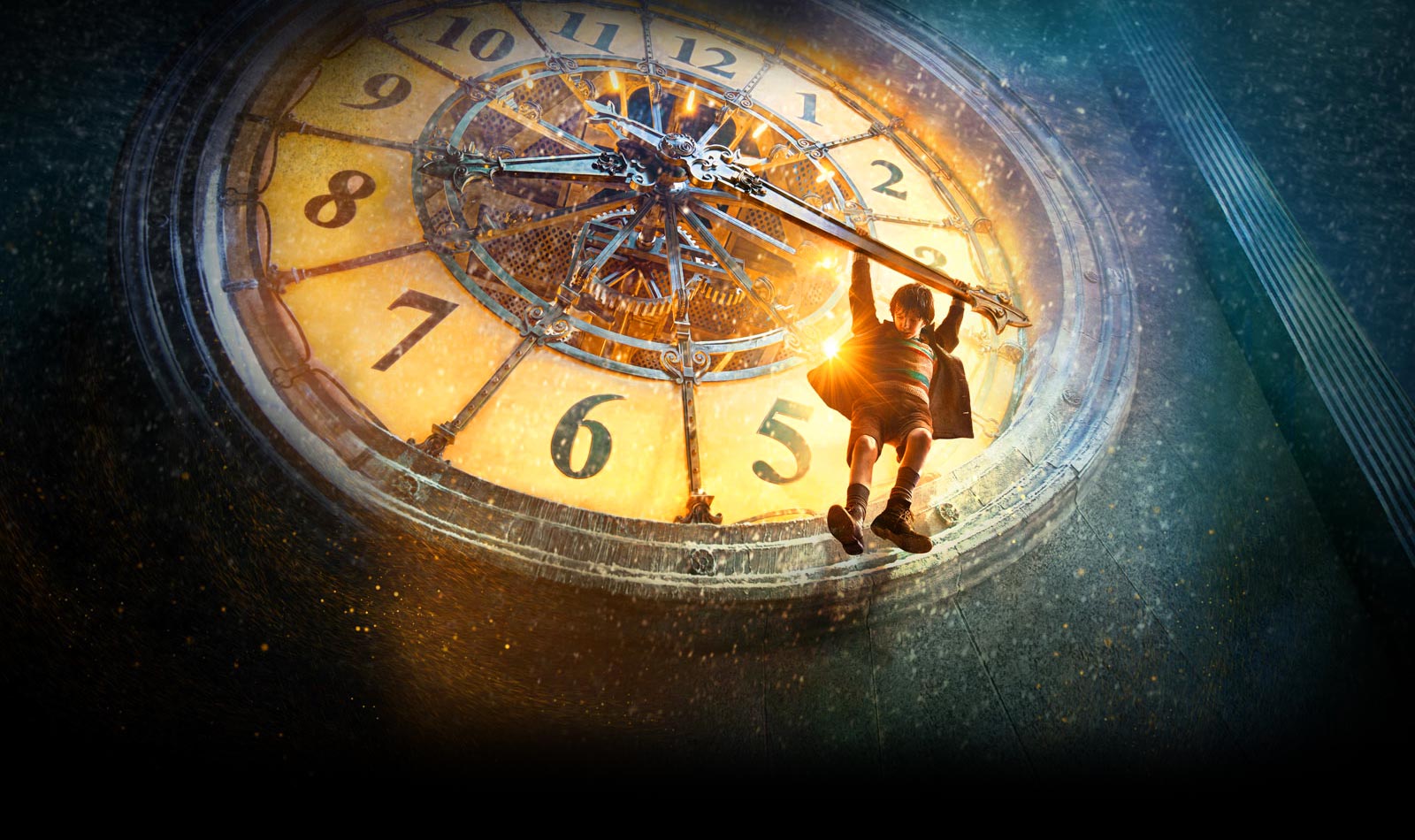
Martin Scorsese’s Hugo had me at the first shot—one of the director’s signature bravado tracks that swoops from an aerial view of early 1930s’ Paris down into the teeming cinematic fresco that is the Gare Montparnasse. We are plunged into the middle of the action, from the train tracks with their narrow platforms amid happy shoppers and hurried travellers, to a pair of Dickensian bright blue eyes peering out of a hole in a clock face above the station’s entrance.

The big eyes belong to Hugo Cabret (played by Asa Butterfield), a lonely twelve year old boy who has a gift with gears, screws, springs, knobs, wrenches, and levers and makes sure every clock in the station is wound and ticking away just the right time. His true occupation, however, is trying to fix his automaton, a mechanical man that is all he has left from a happy past with his clockmaking father (Jude Law). Those times seem like another lifetime; now when Hugo gazes longingly at the dreamlike cityscape and its Eiffel Tower, his expression betrays a sadness too deep for someone so young.


The Artist (2011)


Michael Hazanavicius’ The Artist is a lavish love letter to old Hollywood cinema, but it is so much more. It speaks volumes without ever saying a word. Shot in luscious black and white and (mostly) silent, it harkens back to a time when film was a purely visual medium, proves that if a picture is worth a thousand words, then a second of film is worth that times every one of its twenty-four frames, and assures us that louder isn’t always better. At their simplest and quietest, movies are sometimes the most magical.

Steeped in a bold, unapologetic and unashamed nostalgia, the film chronicles the movie industry’s often painful transition to sound in the late 1920s, and what happened to so many silent film stars when audiences demanded they be heard as well as seen.

The Artist, which spans a five year period, opens in 1927, when the sign in the hills still said HOLLYWOODLAND, and dashing movie star George Valentin was on top of the world. The public adored him and his arsenal of arched eyebrows and dazzling smiles almost as much as he adored himself.