Intro

I love movies. I have loved movies all my life. I grew up on them. When I was eight years old, I managed to convince myself I would make movies when I grew up. Now I am in the process of getting a degree in Film Studies. I write about film more than ever before, partly because I have to for my classes, mostly because I enjoy it, because I have something to write about. Sometimes it helps me understand the film better; sometimes it helps me understand myself better.
I created this blog as a place to showcase my work, and also as an incentive to keep writing reviews, analyses, and essays over breaks, when there’s no one here to grade me.
I have tried many times, and failed, to explain in a coherent manner why it is that I love films. Here is my best—and most coherent—guess.


Showing posts with label silent film. Show all posts

Thursday, January 29, 2015

City Lights (1931) Analysis


The Tramp, wearing tails, drives around in a Rolls Royce.  He spots a man smoking a cigar and patiently follows in the car until he drops the butt. The character jumps out of the Rolls, fights off an old, ragged bum who had himself bent over to pick up the cigar butt, grabs it, sticks it into his mouth, leaps back into his Rolls and drives away smoking; the assaulted bum looks on in stunned silence. This little comic bit, one of the countless memorable scenes in Charlie Chaplin’s City Lights (1931) is more than just a funny sight gag; it is a glimpse into a way of life and into the underlying metaphor of many of the filmmaker’s works. The sequence underscores much of what the great artist’s career was built on: the contrast of wealth and poverty, surface riches and actual need, appearance and essence. What the Tramp needed was never financial success—he was destined, from the time of Chaplin’s Essanay shorts, to fail at attaining material rewards. What the character wanted was of a more spiritual nature: love and acceptance into “proper” society. Most of the time, he was doomed to fail at attaining that as well.

Read my analysis of Chaplin's The Circus here.

Saturday, November 29, 2014

Harold Lloyd and the American Dream: How Speedy Turned into Willie Loman—and Back Again


A young man, straight out of high school, with hopes of a dramatic stage career, hangs around the Edison Company studio, watching the actors, stars as well as lowly extras, walk through the gate. Unable to get work in the legitimate theater, he has turned, temporarily he hopes, to films. But access is denied. All of the directors have their favorite extras, and all of the favorite extras have passes to get through the studio gate in the morning. Unknown, with only one day of work in the movie industry on his resume, playing a Yaqui Indian no less, the man waits and hopes. One day, however, he notices that when all the extras return from lunch, in full makeup, no one asks to see their passes. He devises a plan right there and then. Dawdling away his morning, the young man makes himself up lavishly during the noon hour and joins the returning crowd at one o’clock, slipping in, with a casual wave to the gateman, for the afternoon shooting. The year is 1913, the young man Harold Lloyd. The actor was dogged, inventive, self-made, compensating for what he lacked in experience, training or talent with sheer energy, bounce, and push. It hadn’t occurred to him yet that he would someday play himself.

Lloyd’s entry into the studio that day—and therefore the movie industry— reads like a partial scenario for one of his later films. “He can do anything he tries,” the smitten sweetheart says in the first reel of Never Weaken (1921). It is not only her love for Lloyd’s character that engenders this type of unquestioning faith. Harold the character, as well as Harold the actor, could do most anything he set his mind to. In his best thrill comedies, he generated sympathy not only because he was liable to drop to his death at any moment, but also because he simply refused to. In film after film, Lloyd put himself in danger and emerged unscathed; he got the money, got the girl, and, most importantly, got ahead. His trials, tribulations, and ultimate triumphs spelled the facet of the American Dream on which his mass appeal was built: a mediocre individual and how much he can accomplish through the right combination of hard work, luck, and pluck.

A perfect example of his unwavering climb (this time to success and popularity rather than up a skyscraper) presents itself in the narrative of The Freshman (1925), directed by Frank C. Newmeyer and Sam Taylor. A small-town young man with wildly unrealistic dreams of college, Harold Lamb—and what better name could underscore his innocence—seems the least likely person on the planet to become popular, but giving up is a foreign concept to him. By the end, he has everything he ever wanted: his classmates’ respect and adoration and a beautiful girl who loves him. The future has never looked brighter; there is no way this young man will not win in life as he did on that football field, or even, hopefully, taking fewer falls and hits. Twenty years later, in Preston Sturges’ characteristically disenchanted Mad Wednesday (1947), the once hearty  and hopeful Harold, now bearing the purposely bureaucratized last name of Diddlebock, is slow, broken, bent, a sad parody of the dreams he had as a boy, of Lamb’s triumph as well as the falsity of idealistic American clichés that triumph was built on. Lloyd’s silent characters embodied the hopes of the nation in the twenties, but his naïve optimism had no pull on a post-Depression era audience in the sound period. The homely, small-town values had betrayed him as well as the viewers; the tools required for success in this world—significantly, in Sturges’ film an urban one—were of a much more cynical nature.

Friday, August 29, 2014

Through the Looking Glass: Buster Keaton’s "Sherlock Jr."


Over sixty years before Woody Allen had his characters pop off the screen and into the film’s reality in The Purple Rose of Cairo (1985), Buster Keaton had done the reverse. In Sherlock Jr. (1924), the most silent of all silent clowns played a movie projectionist studying to become a detective. Falling asleep in his booth, he dreams himself into the picture, simply walking down the aisle and into the movie-within-a-movie, where he finds he is at the mercy of film space and film time. While he stands still, maintaining his space-time continuity, the “unreal,” cinematic environment surrounding Buster undergoes the editing process. His universe instantaneously shifts from a park to a desert, to an ocean, to a snowdrift, and the character, although maintaining complete control over himself and his actions, is powerless against the filmic montage that changes his physical surroundings.

The scene epitomizes and exaggerates the conditions in which Keaton the filmmaker has placed Buster the character throughout his career. In film after film, he battled immense natural forces and huge mechanical objects which were beyond his control; in film after film, he simply reacted to the environment and the situation as pragmatically as possible, generally in ways that would solve his problems. Again and again, with elegance, poise, and superb command of his body—at once the most malleable and most tensile of physical objects—Buster made impossible physical stunts look not only possible, but effortless. He used no stunt doubles, no tricks, no sleights of camera or editing.

Keaton’s creative ideas as director, his inventiveness and determination, parallel his ideas as a clown. When cinematic wizardry is used, as it is in the montage sequence of Sherlock Jr., it makes Buster’s life harder, not easier. But the sequence is more than just stunting. It is perhaps Keaton’s clearest realization of the cinema’s mechanical basis, his greatest expression of control over the first and ultimate machine of his career—the camera, that unique mechanical object capable of representing and reshaping reality at the same time. Because, as much as Sherlock Jr. pretends to be about something else, it is a film about film. By taking us inside the picture alongside Buster—and constantly telling us we are, indeed, watching illusion unfold—Sherlock Jr. drops its light comedic premise (about a young man’s wish to become a detective and his romantic troubles) and becomes an almost abstract, unwaveringly funny, look at cinema itself.


Sunday, July 6, 2014

"Safety Last!" and the Most Iconic Image in Silent Comedy


The quintessential Harold Lloyd character is the affable, bespectacled boy next door, anxious to get ahead, not very good at anything, but willing to compensate through sheer energy, bounce, and push; he is the comedic embodiment of the American Dream—what an ordinary man can achieve through a lot of hard work. The filmmaker’s success, as well as that of his characters, is that rare American miracle, the improbable, inspiring accomplishment that couldn’t possibly happen, but did. Safety Last! (1923), Lloyd’s most famous film, tells the story of a small-town young man on the make in the big city, trying to save up enough money so he can marry the woman he loves. Why a story of material betterment and romance should culminate on top of a skyscraper, only Lloyd could tell you. But it is in that juxtaposition of gag and thrill, at the intersection of improbability and idealism, that Lloyd’s specific brand of movie magic transpired. Benefitting from careful plotting, an impeccable sense of timing and tight, functional, unobtrusive editing rhythms, certain sequences of Safety Last!, which follow’s Roach method of accumulation ratherthan Sennett’s madcap speed, can serve as perfect models of how to construct a gag, develop it, twist it, scramble it, then redevelop it, twist it again, and top it. 


Saturday, March 15, 2014

Harry Langdon: The Elderly Baby


If Laurel and Hardy were grown men who acted like children, Harry Langdon, the most helpless, immature, sexless, timid and downright stupid of all the silent clowns, regressed even further, becoming, in effect, a middle-aged baby, seemingly retaining, by some dogged self-abstraction, the obliviousness and immunity of an embryo to the outside world. His most characteristic gestures and roles, among them the main characters of Frank Capra’s Tramp, Tramp, Tramp and The Strong Man, both released in 1926, combined the masculine and the feminine, the adult and the child. Langdon’s innocence and pathos infuse every frame of film, heightened by complete intellectual blankness to most of what surrounds him. A master of the slow burn, every action and reaction he ever emitted on screen betrays a truly infantile perplexity.

Even his makeup created a strange mixture of discordant opposites—the white powder and dark, heavily outlined eyes—that turned him into a combination of clown, infant, and hermaphrodite. Layered over an obviously adult face, the childlike getup resulted in what James Agee called the look of “an elderly baby” or “a baby dope fiend.” His outfit, made up of round, battered soft hat turned up at the brim, tight jacket with the top button fastened, the others unbuttoned, spreading open ridiculously at the hips, baggy trousers and awkward, oversized shoes, only heightenaed the childish absurdity and inadequacy of his characters, who were completely unfit for the world of men—and especially of women—and incompetent at adult social behavior.

Thursday, December 26, 2013

The Circus (1928) Analysis


Those who think that Charlie Chaplin’s use of simple, mostly passive camerawork and compositions stemmed from poor craftsmanship ought to think a bit more about the hall of mirrors scene in the filmmaker’s The Circus (1928).  Chaplin’s technique was meant to find precisely the right angle to communicate the pictorial, intellectual, and emotional values of the shot, foregrounding character, acting, theme, and story over cinematic elements. His chaste, even static camera was confined largely to patient waiting while he reached through it to make contact with us, but if Chaplin wanted to be flashy, Chaplin could be flashy. Almost a full two decades before the similar celebrated sequence of Orson Welles’ The Lady from Shanghai (1946), Chaplin had mastered the cinematic technique necessary to shoot an infinite series of reflections at once.

In The Circus scene, the Tramp finds himself dodging both a policeman and a pickpocket when he runs into the hall of mirrors. Chaplin choreographs the cross-eyed images in the hall so precisely that the two men, running away from each other, bump headlong. The main character’s own figure is multiplied a hundred times so that it is impossible to distinguish the reflection from the man. The sequence serves, however, a thematic purpose much more important than the visual magic it creates. Chaplin, through the numerous reflections and repetitions of his own character, communicates a fractured sense of self, an incomplete identity. Caught between legitimate society (represented by the cop) and a wayward life of crime (represented by the pickpocket), Charlie must choose his own persona; he must discover, as he will throughout the movie, who and what he is and how that relates to all the other facets of himself (the reflections): who and what he appears to be to others, who he wants to be, and who he will never be.

Saturday, November 23, 2013

Sennett and Roach: Two Methods to the Madness

“The Mack Sennett Keystone comedies were the culmination of 15 years of comic primitivism—the characterless jest and the excitement of motion raised to the nth power” (Mast 43). Before Sennett, American film comedy had been confined to the music hall sketch; he gave it the freedom of destructive absurdity. While still at Biograph, the future King of Comedy moved Griffith’s static, inert, indoor-bound camera outside, where it enjoyed both visual freedom and the freedom to move. And move it did, at mad speed, nearing supersonic velocity, stopping only when the figures onscreen smashed through one wall too many, fell down manholes or wells too deep, or were simply overcome with exhaustion The filmmaker added tremendous energy and breathtaking pace, the incongruous and the non sequitur, and a taste for burlesquing people, social custom, and the conventions of other films.

Hal Roach was always second to Sennett; the latter established the formula while the former merely adopted it. While Roach began imitatively, copying Sennett’s chases, falls, custard-pie throwing, and generalized chaos, he gradually began thinking more in terms of character than non sequitur, carefully structured gags instead of speed, logical plotting rather than constant, cumulative romping. Roach’s films benefited from more structure, less improvisation, creating what Gerald Mast calls a perfect stairway to insanity (185). To use the same metaphor, Sennett did not ever take the stairs up; he took the elevator, punched the floor button—or, if feeling especially inventive, whacked it with a hammer—got stuck a couple of times between levels, sometimes plummeted, coming close to the bottom of the elevator shaft, and, finally, shot through the roof.

Monday, October 7, 2013

Tillie's Punctured Romance (1914) Analysis


Tillie’s Punctured Romance, released in 1914, marks Mack Sennett’s first feature length film and his biggest Keystone project. Bringing together all the talent on the Sennett lot—and then some—the movie is also notable as Marie Dressler’s first screen appearance. An adaptation of the stage success “Tillie’s Nightmare,” which also starred Dressler, the film tells a conventional tale of a simple country gal (Dressler) who gets swindled by a shark  from the big city (played by Charlie Chaplin). “The fetid atmosphere of the wicked city” and the country’s “pure breath of open spaces” are placed in sharp and comedic opposition, while the straight-forward, uncomplicated plot—essentially the material of any one of the director’s shorts stretched out for over an hour—becomes simply a pretext for a series of gags, mounting in rhythm and intensity to a speedy culmination; Sennett, parodying both the melodramas of the time (shades of Griffith’s Way Down East) and a gaggle of intellectual pretensions, lofty sentiments and noble virtues, demonstrates once again that tense melodrama and comedic farce are not that far apart; all it takes is an alteration or exaggeration of character personalities, a scrambling of editing rhythms, and a distortion of events, and seriousness dissolves into laughter.

Thursday, May 30, 2013

Sex, Shadows, and Sin on Celluloid: The Femme Fatale and Silent Vamp as Threats to the Social Order


“The dark lady, the spider woman, the evil seductress who tempts man and brings about his destruction is among the oldest themes of art, literature, and mythology in Western culture. She is as old as Eve, and as current as today’s movies…” (Place 35). It is the movies that have given us some of the most memorable images of these women, modern Circes who trap men, use and ultimately destroy them. The beautiful and treacherous woman of classic film noir, the femme fatale, and the equally dangerous and deadly silent vamps are creations of threatened men’s imaginations; they are fantasies of destructive female sexuality as seen through male eyes, but they also become figures of female empowerment. They are strong, independent, self-serving and deceptive women removed from their “proper place” and submissive role in a patriarchal society, and thus challenge the social order. But while the silent film seductress, played most famously by Theda Bara, was a type, her cinematic descendant, the femme fatale, developed a fuller, sometimes ambivalent, more clearly drawn and individualistic personality. The women of films like The Maltese Falcon, The Big Sleep, Double Indemnity, The Postman Always Rings Twice or The Lady from Shanghai were not caricatures of male fear projected unto the collective consciousness of the screen like the vamps, but fully blown, empowered women.

Wednesday, December 19, 2012

Hugo (2011)


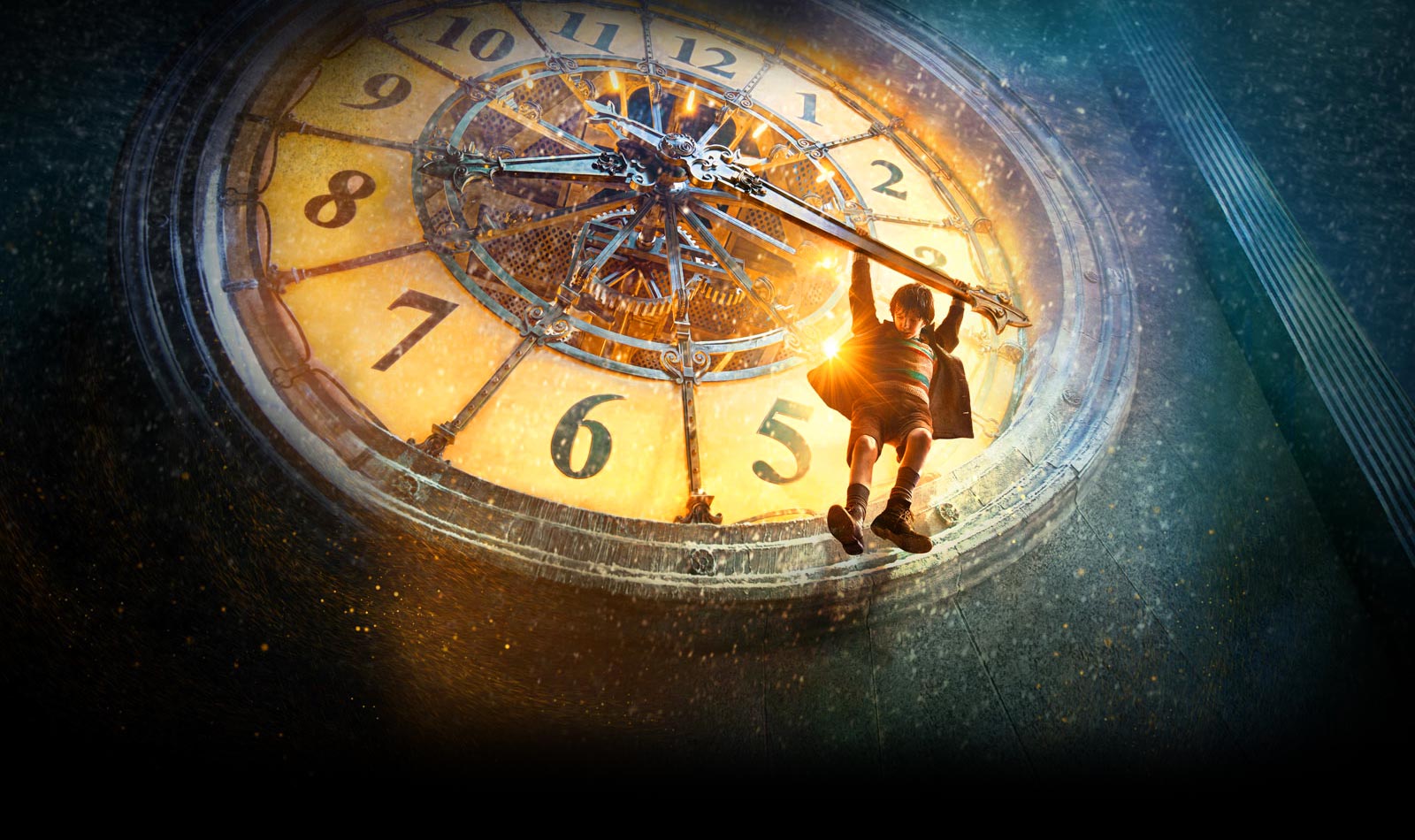
Martin Scorsese’s Hugo had me at the first shot—one of the director’s signature bravado tracks that swoops from an aerial view of early 1930s’ Paris down into the teeming cinematic fresco that is the Gare Montparnasse. We are plunged into the middle of the action, from the train tracks with their narrow platforms amid happy shoppers and hurried travellers, to a pair of Dickensian bright blue eyes peering out of a hole in a clock face above the station’s entrance.

The big eyes belong to Hugo Cabret (played by Asa Butterfield), a lonely twelve year old boy who has a gift with gears, screws, springs, knobs, wrenches, and levers and makes sure every clock in the station is wound and ticking away just the right time. His true occupation, however, is trying to fix his automaton, a mechanical man that is all he has left from a happy past with his clockmaking father (Jude Law). Those times seem like another lifetime; now when Hugo gazes longingly at the dreamlike cityscape and its Eiffel Tower, his expression betrays a sadness too deep for someone so young.


The Artist (2011)


Michael Hazanavicius’ The Artist is a lavish love letter to old Hollywood cinema, but it is so much more. It speaks volumes without ever saying a word. Shot in luscious black and white and (mostly) silent, it harkens back to a time when film was a purely visual medium, proves that if a picture is worth a thousand words, then a second of film is worth that times every one of its twenty-four frames, and assures us that louder isn’t always better. At their simplest and quietest, movies are sometimes the most magical.

Steeped in a bold, unapologetic and unashamed nostalgia, the film chronicles the movie industry’s often painful transition to sound in the late 1920s, and what happened to so many silent film stars when audiences demanded they be heard as well as seen.

The Artist, which spans a five year period, opens in 1927, when the sign in the hills still said HOLLYWOODLAND, and dashing movie star George Valentin was on top of the world. The public adored him and his arsenal of arched eyebrows and dazzling smiles almost as much as he adored himself.