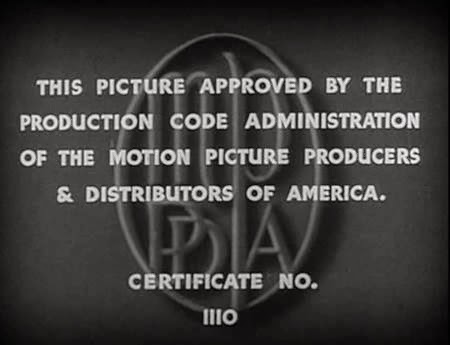
“Suspicious
of a flickering amusement that mesmerized the commonest of folk and the dullest
of immigrants…, reformers of all stripes viewed the motion picture as a gateway
to personal damnation and social deviance… the motion picture medium, if left
to its own devices, was more liable to pollute and degrade than refine and
uplift,” Thomas Doherty writes in Hollywood’s
Censor: Joseph I. Breen & the Production Code Administration
(32). These were the sentiments that led the film industry to adopt the Motion
Picture Production Code in the 1930s, a form of self-censorship that regulated
film content for over three decades. “Just as a single lustful spasm in a
brothel might sow the seeds of disease and dissipation,” the author continues,
“a brief session at a nickelodeon might undo years of educational guidance and
moral instruction” (32). But the reasons behind adopting and enforcing the Code
were varied, ranging from morality to economics, from religion to the need to
protect the industry from government censorship. The effects the Production
Code had on film content were as diverse as the reasons for adopting it. Although
the Code was never considered unconstitutional—because films were not protected
under the First Amendment until 1952—the document undoubtedly encroached on the
motion picture industry’s right to expression and free speech.
