Intro

I love movies. I have loved movies all my life. I grew up on them. When I was eight years old, I managed to convince myself I would make movies when I grew up. Now I am in the process of getting a degree in Film Studies. I write about film more than ever before, partly because I have to for my classes, mostly because I enjoy it, because I have something to write about. Sometimes it helps me understand the film better; sometimes it helps me understand myself better.
I created this blog as a place to showcase my work, and also as an incentive to keep writing reviews, analyses, and essays over breaks, when there’s no one here to grade me.
I have tried many times, and failed, to explain in a coherent manner why it is that I love films. Here is my best—and most coherent—guess.


Sunday, October 13, 2013

Don Jon (2013)


Don Jon, Joseph Gordon Levitt’s writing and directing debut, is a skittering and sweet film filled with humor, heat, and heart. At once openly satiric and disarmingly sincere, the movie manages to be both funny and touching, sometimes in the same instant.

Playing against type as a brawn-bound Jersey boy and an inveterate lothario obsessed with himself, porn, and Scarlett Johansson, Levitt might at first seem like an odd choice for the eponymous Jon—dubbed Don because of his way with the ladies. But the immensely talented young actor has tricks up his sleeve we hadn’t seen before, boldly displayed in front of as well as behind the camera.

Monday, October 7, 2013

Tillie's Punctured Romance (1914) Analysis


Tillie’s Punctured Romance, released in 1914, marks Mack Sennett’s first feature length film and his biggest Keystone project. Bringing together all the talent on the Sennett lot—and then some—the movie is also notable as Marie Dressler’s first screen appearance. An adaptation of the stage success “Tillie’s Nightmare,” which also starred Dressler, the film tells a conventional tale of a simple country gal (Dressler) who gets swindled by a shark  from the big city (played by Charlie Chaplin). “The fetid atmosphere of the wicked city” and the country’s “pure breath of open spaces” are placed in sharp and comedic opposition, while the straight-forward, uncomplicated plot—essentially the material of any one of the director’s shorts stretched out for over an hour—becomes simply a pretext for a series of gags, mounting in rhythm and intensity to a speedy culmination; Sennett, parodying both the melodramas of the time (shades of Griffith’s Way Down East) and a gaggle of intellectual pretensions, lofty sentiments and noble virtues, demonstrates once again that tense melodrama and comedic farce are not that far apart; all it takes is an alteration or exaggeration of character personalities, a scrambling of editing rhythms, and a distortion of events, and seriousness dissolves into laughter.

Thursday, October 3, 2013

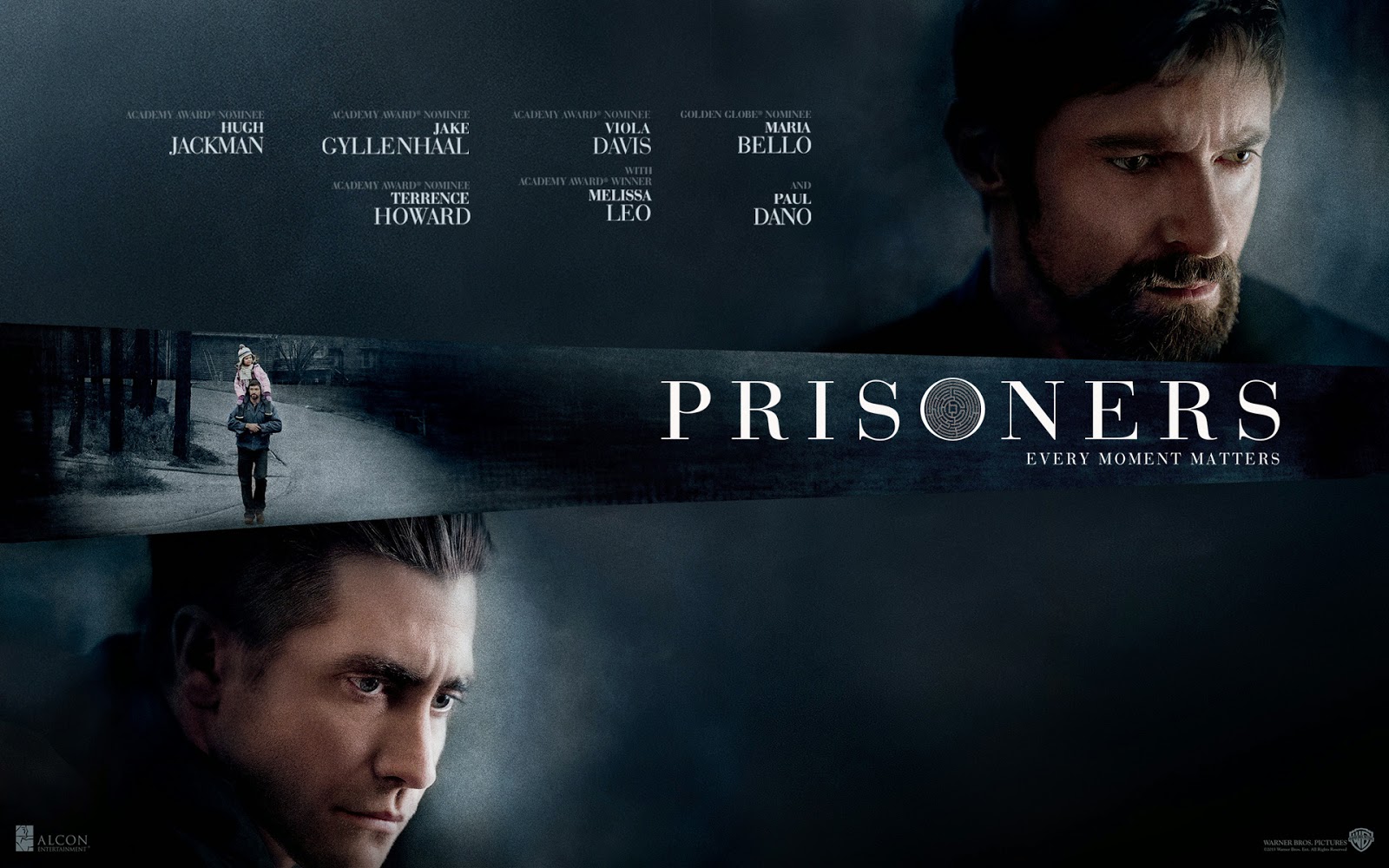
Prisoners (2013)


Fully deserving of mention in the same breath—or gasp—as Seven, Mystic River, and Zodiac, Prisoners' fragmented central mystery burns with white-hot intensity. Director Denis Villeneuve and writer Aaron Guzikowski weave a dense narrative web of seemingly disparate plot strands interwoven around a complex moral core; the movie is concerned with the psychological, emotional and social consequences of violence as much as solving the crime.

The wages of sin, guilt, vengeance and redemption weigh heavily on the characters of Prisoners. With remarkable visual elegance and economy, the gifted Quebecois director flawlessly captures the moods and mores of small-town, God-fearing America. “Our Father, who art in heaven, hallowed be Thy name. Thy kingdom come. Thy will be done, on earth as it is in Heaven.” These words open Villeneuve’s film, spoken over a wintry forest landscape, frozen in the icy late-autumn chill. The slow, creeping camera pulls back to reveal the barrel of a shotgun, pointed head on at a lonely deer. This is only the first of many images of predators pursuing their prey.

Tuesday, October 1, 2013

“Always Have an Iguana Around,” Werner Herzog Advises Aspiring Filmmakers


“Is there such a thing as insanity among penguins?” The question is one of many, just as striking, that legendary filmmaker Werner Herzog has posed through his work. The Montgomery Fellow returned to Dartmouth last month for a five-day residency, the highlights of which included a memorable presentation Wednesday, September 18 in Spaulding Auditorium that I was lucky enough to attend.

A landmark of the New German Cinema—although he prefers “Bavarian Cinema”—and the creative force behind over 60 films, including Aguirre, the Wrath of God, Fitzcarraldo and Nosferatu and documentaries such as Grizzly Man, The Cave of Forgotten Dreams and Encounters at the End of the World, Herzog presented a reel of clips from his work and sat down with Film and Media Studies Associate Professor Jeffrey Ruoff for an onstage conversation followed by an audience Q&A session.

Introduced by Ruoff as “one of the world’s greatest filmmakers, working at the height of his creative powers,” Herzog’s long and varied career eludes classification. The writer-director-producer sees thematic unity in his films, provided by the “common denominator of the universe: chaos, hostility and murder.”