Intro

I love movies. I have loved movies all my life. I grew up on them. When I was eight years old, I managed to convince myself I would make movies when I grew up. Now I am in the process of getting a degree in Film Studies. I write about film more than ever before, partly because I have to for my classes, mostly because I enjoy it, because I have something to write about. Sometimes it helps me understand the film better; sometimes it helps me understand myself better.
I created this blog as a place to showcase my work, and also as an incentive to keep writing reviews, analyses, and essays over breaks, when there’s no one here to grade me.
I have tried many times, and failed, to explain in a coherent manner why it is that I love films. Here is my best—and most coherent—guess.


Showing posts with label 3D. Show all posts

Friday, May 30, 2014

X-Men: Days of Future Past (2014)


Three years ago, Kick-Ass director Matthew Vaughn reinvigorated the Marvel franchise with the clever historical revisionism of 2011’s X-Men: First Class, which boasted a superb new cast, cool retro style, globetrotting intrigue, and a refreshing emphasis on character. Bryan Singer, the series’ original creator on board as director for the first time since 2003’s X2: X-Men United, confidently carries that same momentum, combining the gravitas of the early films with the playfulness of Vaughn’s follow-up. Making for exceptional pacing and relentless drive, Singer pulls together an ambitious, suspenseful film and secures a future for the franchise at the same time he continues to reinvent it.

The X-Men series has always been somewhat unique among its kind because it wears its allegorical heart on its sleeve. By chronicling the adventures of a despised minority, it pokes around some interesting social and political issues. The theme of ostracized, oppressed outsiders empowered to fight against their social stigma in ways both good and evil runs throughout the seven films to date. The central conflict is the endless moral argument between Professor X and Magneto, between the idea that mutants should fight for the redemption of mankind and the insistence that they should defend themselves by any means necessary. This time around, their misunderstood humanity is amplified by extreme physical vulnerability, their struggle framed by a genocidal battle in the near future.

Wednesday, April 30, 2014

Size Matters: Television’s Effects on the 1950s Film Industry


There is a scene in George Cukor’s A Star Is Born (1954) that demonstrates not only the director’s mastering of the new widescreen format and the careful balancing of composition within a larger frame, but also Cukor’s awareness of its history and value. It features aging matinee idol Norman Main (James Mason) getting fired by head of the studio Oliver Niles (Charles Bickford). The actor’s popularity had been slipping, along with the studio’s power and commercial viability after the introduction of television into the American home. During the conversation, the men stand between two flickering black-an-white images on the left and right edges of the frame. To the far left is a television set turned on to the fights, to the far right a movie, projected onto a screen in the next room. Main and Niles talk to each other precisely between a video image and a film image—a visual translation of the historical crossroads where all the studio heads and stars found themselves in 1954, with box office revenues plummeting.

Two years earlier, 1952 had marked the first full year in which the whole nation was blanketed by network television, and for the first time since the early years of the Depression, the movie industry was in a state of decline. 1952 was also, not incidentally, the year that brought wide screens and stereophonic sound, more practicable and less expensive color, a growth of independent production, and a landmark Supreme Court decision on film censorship. This was the beginning of a transition that would lead the American film industry from the hardened confines of a production-distribution-exhibition pattern that had lasted for over two decades into uncertainties and changing forms. Television was, of course, not the only factor that prompted this transition, but it was a heavily influential one. If the theater screen was to compete with the small one, Hollywood had to offer audiences something that they couldn’t get in their living rooms: new, bigger screens and visual effects, better sound quality, color, new genres, more sex, more violence.

Saturday, August 3, 2013

The Wolverine (2013)


Trying to resist the cinematic lobotomy Hollywood pulls on viewers every summer, I have come up with a movie-going strategy that involves lowering expectations. If, stepping into a theater, I expect nothing, then the films that offer nothing or close to it (After Earth, The Hangover Part III, Man of Steel, R.I.P.D.) will not disappoint as much. And every once in a while, I will be surprised by a movie that offers everything: story, character, excitement, action, intrigue, romance, and the magic of escaping into a different world. James Mangold’s The Wolverine was that kind of surprise.

Repairing the damage done by Gavin Hood’s X-Men Origins: Wolverine, Mangold tells an unexpectedly personal and intimate tale with style and snap. This time around the most iconic X-Man of all is somewhat world-weary, wounded, and worn. At the forceful center of the film is Hugh Jackman, the biggest marvel of Marvel's The Wolverine, who returns for his sixth screen appearance as the lupine superhero. Letting a less visible, more vulnerable side show, Logan, a.k.a. the titular hero, tests his extremes and overcomes his limits, physically as well as emotionally. The movie  is as packed with feeling as its title character, a mutant with more humanity than all of the human heroes of this summer’s blockbusters combined. The filmmaker’s foray into the X-Men franchise is endlessly entertaining, if somewhat existential, dipping into dark and ponderous psychological territory; Mangold puts his character through all sorts of physical pain, but the director is also interested in the deeper aches of the soul.

Monday, July 29, 2013

R.I.P.D. (2013)


Thank heavens for Jeff Bridges! His squinting, six-barrel-slinging, Stetson-wearing frontier marshal is the only thing in this undead cop thriller with a pulse. R.I.P.D., Robert Schwentke’s uninspired mashup of Men in Black, Ghostbusters, and Ghost, had its obituary written by the press long before release, critics everywhere denouncing it as the ninth circle of mindless blockbusters. If the film is not exactly the calamity everyone portended, it’s due solely to Bridges and a sprinkling of some mildly impressive special effects. But as much as the actor tries, and as much as he succeeds to elevate his grizzled, gravely 19th century lawman turned 21st century deceased detective way above the potential and pretense of an inert script, R.I.P.D. showed up in theaters DOA. Its few isolated positives are as noticeable and affecting as a fine summer mist amidst a raging, bludgeoning thunderstorm of bad.

Adapted from Peter M. Lenkov’s Dark Horse comic series by the Clash of the Titans team of Phil Hay and Matt Manfredi, the movie has character types instead of characters, obvious villains, and sluggish plotting that introduces one tediously predictable element after another: the young honest cop, his adoring, beautiful French wife, and the corrupt partner who talks him into some dirty, risky business that leads to his demise. (As an aside, is it just me or does that stolen “gold” look like shineless spray-painted gravel?)

Thursday, May 16, 2013

The Great Gatsby (2013)


“It eluded us then, but that’s no matter—tomorrow we will run faster, stretch out our arms farther…  And then one fine morning—So we beat on, boats against the current, borne back ceaselessly into the past.”                                                                                                                                                                                                                                                                                                                                                                                                 —F. Scott Fitzgerald, The Great Gatsby 

Baz Luhrnman’s The Great Gatsby is an audacious, fascinating technological and aesthetic experiment in expressionism, a “kaleidoscopic carnival,” to borrow Fitzgerald’s phrase, as bursting with bejeweled excess as its title character’s boozy parties, the cinematic equivalent of the biggest, craziest, loudest guest at a gathering where the confetti falls and the champagne flows like monsoon rain, and the twenties really roar their golden roar. Everything shines in baroque, brilliant, beautiful fakeness.

A lavish, splashy celebration of the extravagance of the Jazz Age, Gatsby is filled to the brim with the sort of stylistic gambits Luhrman fans have come to expect—epic, classic melodrama that blends old world theatrics with the newest in postmodernist subjective filmmaking, CGI cityscapes, anachronistic soundtrack mashups of period music and modern pop, psychological drama and speedy slapstick. But through the brightly-hued haze of acrobatic camera movements, opulent flowers, flappers, fringes, and frills, Luhrman’s reverence for his source material shines through like the blinking green beacon of light at the end of Daisy’s peer.

Monday, May 13, 2013

Iron Man 3 (2013)


Oversized, overstuffed, and occasionally overwhelming, Iron Man 3 plays out like a collage of impressive, explosive set pieces, special effects, and sardonic one-liners. The third installment of the series, this is a mega blockbuster at the crossroads of two hugely successful franchises of the Disney-Marvel massive entertainment empire. Already a hulking box-office behemoth, Shane Black’s movie is unique in an often sullen summer superhero-packed cinematic climate for its brilliant, self-aware, self-effacing humor.

Iron Man 3 offers an astute study of a relationship, wrapped up in images of red hot fire people and armies of iron knights, molten steel and heaps of burning rubble in a computer-generated fantasy in which the laws of physics are merely theoretical. The film at times seems like a screwball comedy trapped in the body of a superhero action movie. Tony Stark (Robert Downey Jr.) trades barbs with Pepper Potts (Gwyneth Paltrow), his former assistant turned girlfriend and CEO of his company, with a kind of old-school Hollywood wise-cracking chemistry.

Wednesday, December 19, 2012

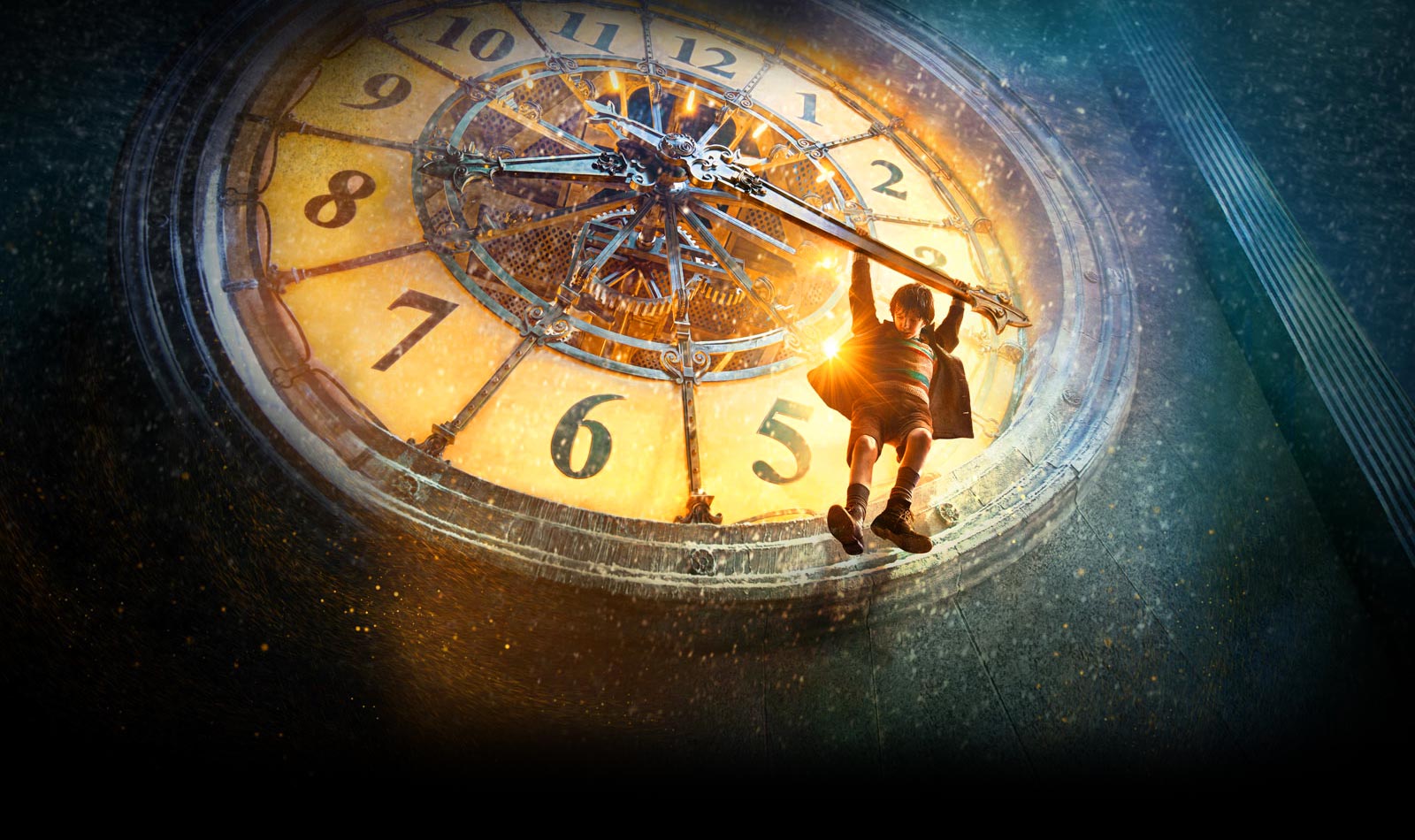
Hugo (2011)


Martin Scorsese’s Hugo had me at the first shot—one of the director’s signature bravado tracks that swoops from an aerial view of early 1930s’ Paris down into the teeming cinematic fresco that is the Gare Montparnasse. We are plunged into the middle of the action, from the train tracks with their narrow platforms amid happy shoppers and hurried travellers, to a pair of Dickensian bright blue eyes peering out of a hole in a clock face above the station’s entrance.

The big eyes belong to Hugo Cabret (played by Asa Butterfield), a lonely twelve year old boy who has a gift with gears, screws, springs, knobs, wrenches, and levers and makes sure every clock in the station is wound and ticking away just the right time. His true occupation, however, is trying to fix his automaton, a mechanical man that is all he has left from a happy past with his clockmaking father (Jude Law). Those times seem like another lifetime; now when Hugo gazes longingly at the dreamlike cityscape and its Eiffel Tower, his expression betrays a sadness too deep for someone so young.